Tuesday, 23 April 2019

Video: Morning Routine To Reduce Your Anxiety

Morning Routine To Reduce Your Anxiety

Wake up earlier.. 
Implement a strong morning routine..

1. Hydrate with a magnesium supplement ðŸ˜Š
2. Make your bed ðŸ˜Š
3. Take a long warm shower ðŸ˜Š
4. Eat a healthy breakfast including oats, protein & omega 3 oil ðŸ˜Š
5. Meditate in your own way ðŸ˜Š
6. Take a long walk & practice mindfulness/gratitude  😊

Thursday, 18 April 2019

Your Stress Free Easter Weekend!

Easter weekend holiday is upon us: are you excited? 
Or, are you a wee bit stressed?
With the exception of those who still believe in the Easter bunny, most people seem to err on the side of 'feeling stressed' around the holidays. 
Small talk about the weather is replaced with -  "Are you ready for the holidays!?"
So what does 'being ready' really mean? Does it mean preparing brilliant entertaining 'Easter egg hunt', getting that perfect 'egg' for the 'hard to buy' people on your list, baking all 12 family favourite dishes, preparing the perfect meal and also sticking to your workout and diet regime?
I think this time of year is wonderful, but if you fall into the holiday trap of trying to do everything for everyone, it can also be incredibly stressful. If you love doing all the Easter-y activities, and feel like it's very manageable, then go ahead and enjoy it. 
However, if you feel overwhelmed with all that needs to be done, know that you don't have to do it all. 
Do this simple exercise to make your holiday to-do list more manageable and give yourself permission to relax a little.
The exercise is called a brain dump. This version is geared toward the holidays, but you can do it anytime of the year. I do, and it's wonderful! 
Here's how it goes:
1.
Write a list of all the tasks and activities you need to do around the holidays. Separate the tasks into a 'daily list' (things you do daily such as preparing meals, work, spending time with family, commuting, workouts, etc.). Create a weekly list (things you do 1-2 times per week) and a 'one-off' list (things you will likely only need to do only a few times, such as holiday shopping, writing Easter cards, preparing holiday meals, decorating, organising Easter Egg Hunts, baking, etc.).

2. Allot an amount of time to each activity.
3. Now you're ready for the fun part. 
Place a STAR beside all the tasks that are important to you, that you enjoy doing. Be honest- do you really have to do everything on your list? Do you really need to bake 12 different kinds of food? Will your family really suffer? 

If you really want to attend all the Easter activities you've been invited to, then great! 
But if you really don't want to go to a few, it's not 'star-worthy.'
4. Now ask, can you 'simplify any of the starred activities? If you need to spend an entire day preparing a holiday meal (and don't truly enjoy it), are there ways to simplify the task? Can you get help? Block time in your calendar to do the star-worthy activities. 
5. For everything that is not starred, you get to delegate or dump the task. Again, be honest. If you don't need to do something (for example, someone else is capable of doing the task), delegate it. No one to delegate it to? Then dump it.
This holiday season, I hope you can enjoy the time spent with loved ones rather than worrying about how you are going to tackle your 'to-do' list. 
"Focus on the things you like to do, and have a 
relaxing, stress-free holiday season"


by Tanja M Shaw: source

Tuesday, 16 April 2019

Video: Your Basic Guided Meditation To Mindfulness

7 minutes to mindfulness to help with your...
...anxiety and depression.
Buddhist meditation:
Follow your breath; 
Allow thoughts to come and go.
Bring your awareness back to your breath.
Open yourself up to a... 
deeper appreciation of this moment.


Monday, 15 April 2019

Meditation For Overcoming Your Social Anxiety

Meditation Helps Social Anxiety
Anxiety and stress have a tendency to be truly difficult to deal with and they can put a lot of pressure on the mind. 
Upon experiencing the severity of the problem that stress and anxiety can cause, it is no surprise that so many will look towards means of alleviating the problem. 
However, the steps people will take to deal with such issues are often worse than the problem itself. Or, in some cases, such steps can outright compound the problem. Such is the case with using prescription pills to treat anxiety. These pills may provide a temporary calmness but they never get to the root cause of the issues that create anxiety. Additionally, prescription pills possess the potential to harm the internal organs which is certainly not something anyone would wish to deal with.
Thankfully, as more and more people are becoming aware of the dangers associated with modern anti-anxiety drugs, people are also becoming more aware of older, traditional methods known for their ability to reverse many of the problems associated with high anxiety. 
One such method is the concept of meditation.
Meditation sometimes gets a proverbial bad rap as well. This is because it has a tendency to be lumped in with a number of less than helpful "New Age" concepts that some may find more odd than helpful. 
However, meditation is certainly not as obtuse as many think. It is simply a form of exercise that works on strengthening the mind as opposed to the physical body. Often, with a little practice and dogged determination, it is not as tough as some assume to reap huge benefits from meditation sessions. On a basic level, meditation involves calming oneself, emptying the mind, and allowing negative and stressful thoughts to exit. 

Meditation can be performed seated, lying down, or even walking. 
The key with all forms of meditation is that the mind empties itself out and there is no attempt to think about those things which can make a person anxious or upset. 
For those that cannot keep their mind emptied, it may be best to meditate on a Zen koan which is a riddle with no particular answer. What is the purpose of these riddles? 
They are intended to help you learn about yourself and reach into your inner thoughts. 
And, of course, they keep your mind occupied which prevents it from dealing with hidden stress and anxiety.
Over time, the effects of meditation begin to reveal themselves and they are often quite positive. 
The mind will start to be less cluttered and the psychic noise and running thoughts that are at the root of all anxiety will slowly calm down and disappear.
This does not mean the serious problems related to the anxiety condition will go away. However, the ability to deal with such problems may very well be improved since the mind will not be in a position where it is at the mercy of such aggravation. 
Best of all, meditation can take place in durations as small as ten minutes and still have positive effects. 
That is why it remains so highly recommended for this in need of a helpful treatment method.
Overcoming anxiety without getting to the core of reducing stress in your life is an almost impossible task. 
If you want to experience anxiety relief naturally you will need to take control of all of the things in your life that are causing you stress and anxiety.


by David McDonough: source

Friday, 12 April 2019

Video: Modern Info' Overload: Anxiety & Depression: Ruby Wax

Ruby Wax on mental illness.. 
and how our.. 
'modern day information overload' 
(e.g. social media) is causing this. 
Ruby says how meeting Mark Williams; teacher of mindfulness cognitive therapy 
helped her on her path to understanding that 
meditation / mindfulness can calm the amigdala cerebral part of the brain (fight or flight response) into a more grounded state, which then helps one in everyday living.  

3 'R's' Technique Helping Social Media Depression

3 R'S Technique

Helping You WIth

Social Media Anxiety & Depression

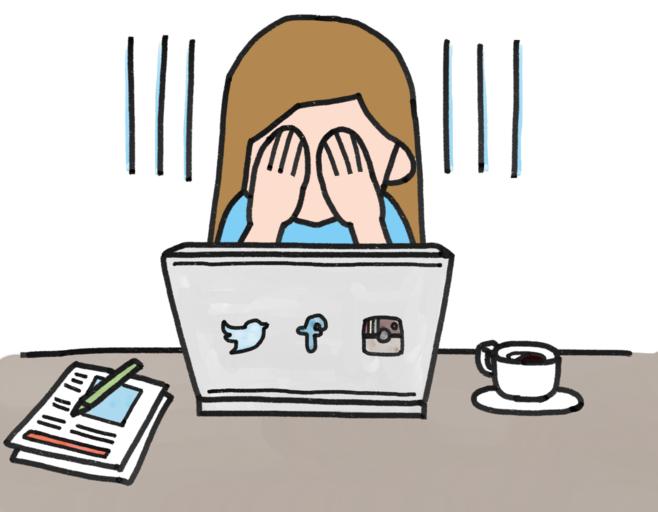
There can be no question that Facebook, Twitter, LinkedIn, 
and any number of other social networking sites come with benefits.

With countless users worldwide, and more joining daily, 
it's clear social media is a force to be reckoned with.
But are you getting more than you bargained for?
Psychologists now recognize that for some users, the world of social media comes with dangers.

Symptoms ranging from the relatively 
minor (mild disappointment) to the most serious 
(thoughtsof suicide) are widespread enough to net a new diagnosis: 

Facebook Depression
How do you feel when you log in to your favorite social networking site? 
What do you get from it? 
Could you be at risk for depression...
...or feeling its effects already?
The 3Rs technique is a great way to identify some of the side-effects that come with social media usage and, 
more importantly, begin to make changes if your mental and physical wellness are suffering. 
Grab a piece of paper and pen, and we'll walk through the steps together:


  1. Recognise 
  2. Reframe
  3. Reclaim

1. RECOGNISE what's going on.


First, assess what happens to you when you log in to your favorite social networking site.


  • Do you have feelings of disquiet, or a vague sense that something is wrong, the moment you view your account?
  • Do you turn on the computer with a feeling of anticipation, but quickly feel defeat take its place when you check your connection stats?
  • Do you feel happy for your connections when you see a lot is going on in their lives, or do you feel disappointment because it didn't happen to you?
  • Do you worry you might be missing something when you're not online?
  • Do you compare your stats with those of other users? If so, do the numbers induce feelings of jealousy, discontent, or superiority? 
  • Do these feelings subside after you've left the site, or do they color your offline world?
2. REFRAME your thoughts and actions.

It will take a change in mindset to get past the negative effects of too much social networking. 
Depression of any kind doesn't go away just because you're aware of it. 


You must take action by first reframing your negative responses. 

For example:
"My numbers are small, and my network isn't growing."
vs.
"I can thoroughly trust every one of my genuine connections."

"No one has answered my last five posts."
vs.
"I can reach out by answering five other people's posts today."

"I'm lonely."
vs.
"I can call my tennis partner and make a date."


"My status as a professional can be measured by others' responses, or lack thereof."
vs.
"I can be proud of the image I created for myself/my business without the help of social media."

"This tension headache won't go away."
vs.
"I can work away from the computer for the next hour."

"Everyone ELSE's life seems to be constant excitement."
vs.
"I can plan a live event or outing with my friends or colleagues."

Seize those negatives, and identify a way to move them to your advantage by taking control and responsibility. In doing so, you build a new habit of more healthful thinking and acting.
3. RECLAIM your health and wellness.


Changing your mindset is an important step, 
...but it isn't the last one. 
Make good on those new, positively re-framed messages: 
Follow up with action.

When it comes to social media, that action may need to take place offline. 
You won't cure yourself of depression, stress, or anxiety by spending more time with social networking. 
Instead, treat online networking like any other business or personal task: 
Make an appointment for it. 
Reserve a place in your schedule for social media, and when it's not that time, give your full attention to all the other priorities in your world. 
Take all those hours and mental energy you've been spending on your online profile, and use them instead to care for and embrace your true self.
One more status update, one more profile update, one more follower...none of that is worth jeopardizing your health and wellness. 
Because remember, no one lives or dies by Facebook stats.


 "YOU - the person,

are worth far more than the sum of your stats"


by Roberta Mittman: source

Video: 7 Buddhist Habits That Will Change Your Life

1. Simplify Your life.   2. Develop Yourself A Selfless Attitude - Help Others. 3. Meditate: Your Stepping Stone To Your Enlightenment....